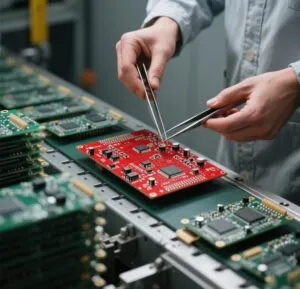
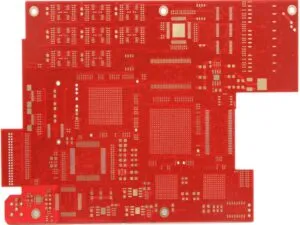
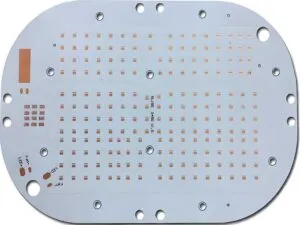
IPC Class 3 refers to the highest performance and reliability category defined by IPC (Association Connecting Electronics Industries) standards for printed circuit boards (PCBs) and electronic assemblies. It’s designed for products where continuous high performance, extended life, and uninterrupted service are critical, and downtime is unacceptable.
Although most of PCBs are produce and assembled as IPC-A-600/IPC-A-610 Class 2, such as consumer electronics, computer peripherals, telecommunication & wireless, IoTs, robotics, LED & lighting, test & measurement, industrial controls. But for same special area, IPC-A-600/IPC-A-610 Class 3 must be applied, such as automotive, medical, military, aeronautics, life support systems., etc. Military and aeronautics even requires IPC Class 3/A which is a higher standard than Class 3.
Here in PCBA123, we can supply PCBs produced according to IPC Class 3 and IPC Class 3/A, to meet the highest standard in PCB industrial.
Core Principle:
“Zero Defects” Mentality: While perfection is impossible, Class 3 requires the absolute minimum number of allowable defects. It demands the highest level of process control, inspection, and testing throughout PCB design, PCB fabrication, and PCB assembly.
Mission Critical: Failure could have severe consequences: loss of life, catastrophic system failure, failure of critical infrastructure, significant financial loss.
Where is IPC Class 3 Used?
Aerospace & Defense: Avionics, flight control systems, satellite systems, weapons systems.
Medical Devices: Life-support systems, implantable devices, critical diagnostic equipment.
Automotive Safety Systems: Airbag controllers, anti-lock braking systems (ABS), engine control units (ECUs) in safety-critical functions.
Industrial Control: Systems controlling critical infrastructure (power plants, chemical processing), safety shutdown systems.
High-Reliability Computing: Servers/data centers where downtime is extremely costly, telecom backbone equipment.
Products Subject to Harsh Environments: Extreme temperatures, vibration, shock, humidity.
Key Requirements & Implications:
Stricter Tolerances: Tighter controls on trace width/spacing, hole sizes, annular rings, layer-to-layer registration, material properties (e.g., Tg, CTE).
Enhanced Material Specifications: Higher quality base materials (laminates/prepregs) with better thermal, mechanical, and electrical characteristics. Often requires specific material qualifications.
Robust Fabrication Processes: More rigorous process controls in drilling, plating, etching, lamination, and surface finishing. Minimizing voids, inclusions, plating defects, and micro-cracks is paramount.
Rigorous Inspection & Testing:
100% Electrical Testing: Typically required (e.g., Flying Probe, Fixture Testing).
Automated Optical Inspection (AOI): Extensive use at multiple stages (bare board and assembled).
Automated X-ray Inspection (AXI): Critical for inspecting hidden solder joints (BGAs, QFNs) and internal layer features.
Microsectioning (Cross-Sectioning): Used for process qualification, failure analysis, and verifying plating thickness, hole wall quality, and material integrity.
Acceptance Criteria: Defect criteria defined in standards like IPC-A-600 (Acceptability of Printed Boards) and IPC-6012 (Qualification and Performance Specification for Rigid PCBs) are significantly tighter for Class 3. Many defects acceptable in Class 1 or 2 are rejectable in Class 3.
Extensive Documentation & Traceability: Complete manufacturing records, material certifications, test results, and full traceability of components and processes are mandatory.
Design for Reliability (DfR): Layout rules specifically for Class 3 (e.g., wider annular rings, conservative spacing, robust via protection, thermal management considerations).
Stringent Assembly Requirements: Governed by IPC J-STD-001 (Requirements for Soldered Electrical and Electronic Assemblies) and IPC-A-610 (Acceptability of Electronic Assemblies) with Class 3 criteria. Requires highly skilled operators, controlled environments, and premium solder materials.
Key IPC Standards Involved:
IPC-6011: Generic Performance Specification for Printed Boards (Defines the Classes 1/2/3 framework).
IPC-6012: Qualification and Performance Specification for Rigid Printed Boards (Detailed requirements for rigid boards by class).
IPC-6013: Qualification and Performance Specification for Flexible/Rigid-Flex Printed Boards (For flex/rigid-flex PCB).
IPC-A-600: Acceptability of Printed Boards (Visual acceptance criteria with photos – essential reference).
IPC-A-610: Acceptability of Electronic Assemblies (Visual acceptance criteria for assembled boards).
IPC J-STD-001: Requirements for Soldered Electrical and Electronic Assemblies (Process requirements for soldering).
IPC-2221/2222: Generic/Sectional Design Standards (Guiding design rules).
Cost & Lead Time Impact:
Significantly Higher Cost: Due to premium materials, tighter process controls, more extensive testing (100% electrical, AXI, microsectioning), increased documentation, and potentially lower yields.
Longer Lead Times: The rigorous processes, inspections, and potential need for specialized materials or requalifications add time.
In Summary:
IPC Class 3 represents the pinnacle of PCB reliability. It demands the strictest adherence to manufacturing standards, the highest quality materials, the most rigorous inspection and testing regimes, and comprehensive documentation. This level of scrutiny comes with a significant cost and time premium but is essential for applications where failure is not an option. When specifying a PCB as Class 3, you must communicate this requirement clearly to your fabricator and assembler from the outset, as it impacts every stage of the product lifecycle.