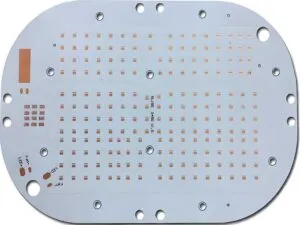
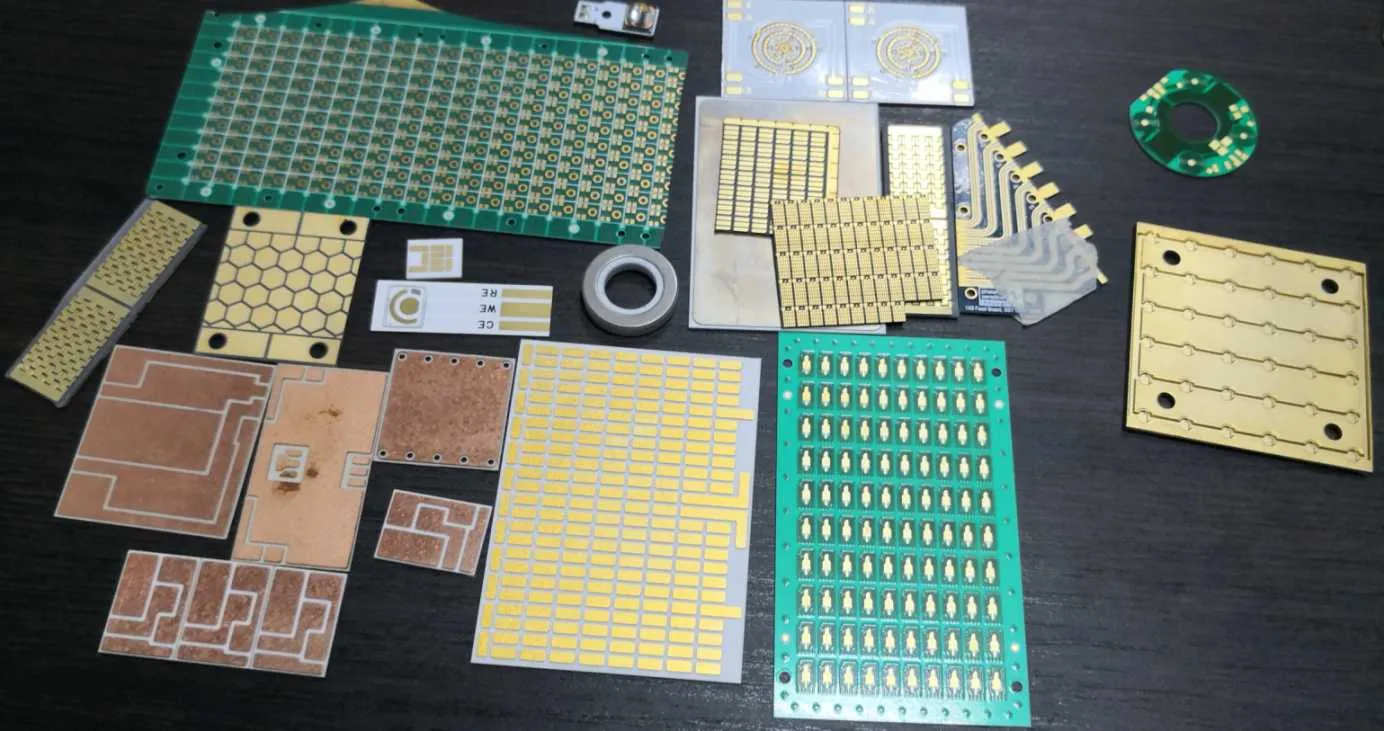
Ceramic PCBs (Printed Circuit Boards) are advanced substrates made from ceramic materials (e.g., alumina pcb, aluminum nitride pcb, beryllium oxide pcb) instead of traditional FR-4 or polyimide. They excel in extreme thermal, mechanical, and electrical environments, making them ideal for high-power, high-frequency, and miniaturized applications.
For the ceramic PCB, this is ceramic substrate with printed circuit, with advantages of less value of soldering, less value of terminal resistance and good thermal conductivity, can withstand high current in the projects. PCBA123 is a professional ceramic PCB manufacturer from China that supplies quality ceramic PCB for electronic applications at wholesale price. Email us if you have demands in ceramic PCBs.
Ceramic PCB boards are just as popular as any other type of PCB board. They are widely used for carrying out a variety of tasks. Known for its electrical insulation properties and high adhesion strength, you can always rely on a ceramic PCB board to deliver the results that you desire. It is possible one of the best PCB boards out there. Only when you use it will you come to realize just how much it has to offer.
What Is Ceramic PCB Board?
A ceramic PCB board is a PCB board that uses ceramic to provide superior insulation. It has been designed to ensure that companies can create electronic products that are able to handle electrical conductivity.
Ceramic PCB Manufacturing Processes
Thick-Film Technology
Screen-printing conductive/dielectric pastes (Au, Ag, PdAg) onto ceramic, then firing at 850–1000°C.
Thin-Film Technology
Sputtering or vapor deposition of metals (Cu, Au) onto ceramic, enabling ultra-fine traces (≤10 µm).
Direct Bonded Copper (DBC Ceramic pcb)
Fusing copper foil (100–600 µm) to ceramic at 1065°C, ideal for high-current circuits.
Laser Processing
Drilling microvias (<100 µm) and cutting complex shapes with precision.
Advantages and Disadvantages of Ceramic PCB Board
There are many benefits of ceramic PCB boards as mentioned below.
• Offers a thermal expansion coefficient that is similar to that offered by a silicon chip. This means that you can reduce cost by saving labor and material when you use it.
• Helps improve the yield by reducing void, thermal resistance, and solder layer.
• Ensures excellent thermal conductivity which means that the chip package would remain compact and the power density would increase to improve the reliability of the electronic product.
• Ultra-thin and does not cause any environmental toxicity problems.
• Provides a large current carrying capacity.
• Low thermal resistance.
• High insulation that can withstand voltage for maximum protection and safety.
• Allows for new assembly and packaging methods to be implemented to produce a more compact and highly integrated product.
• Can be a more costly option.
Applications and Usages of Ceramic PCB Board
As ceramic PCB boards boast various properties, they can be used for various purposes as mentioned below.
Power Electronics
IGBT modules, EV inverters, and solar microinverters (DBC substrates handle 100+ A current).
LED Lighting
COB (Chip-on-Board) LEDs for automotive headlights (50+ W/cm² heat dissipation).
RF/Microwave
5G base stations, radar systems, and satellite comms (low signal loss at 40+ GHz).
Aerospace & Defense
Avionics control systems and missile guidance PCBs (vibration/radiation resistance).
Medical Implants
Hermetic packaging for pacemakers and neurostimulators (biocompatible alumina).
How to Find a Reliable Ceramic PCB Board Manufacturer in China?
You should be able to find a reliable ceramic PCB board manufacturer in China when you consider the following tips.
• Find out more about the company reputation.
• Ask for references from the company.
• Look into the quality control system certificate to ensure that it is valid.
• Review the import and export license of the company.
Choose the Best Ceramic PCB Board Manufacturer in China
When it comes to the best ceramic PCB board manufacturer in China, PCBA123 is the ultimate option. It has established a name of its own in a short period of time. The company boasts advanced capabilities and can create custom ceramic PBC boards in accordance with your requirements.
Conclusion
Ceramic PCBs solve critical thermal and reliability challenges in cutting-edge industries but demand careful cost-benefit analysis. Choose them for applications where heat dissipation, high frequency, or extreme environmental stability outweigh cost and size constraints.