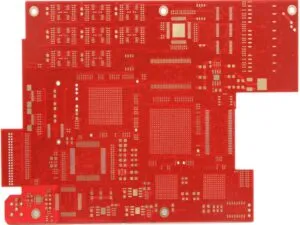
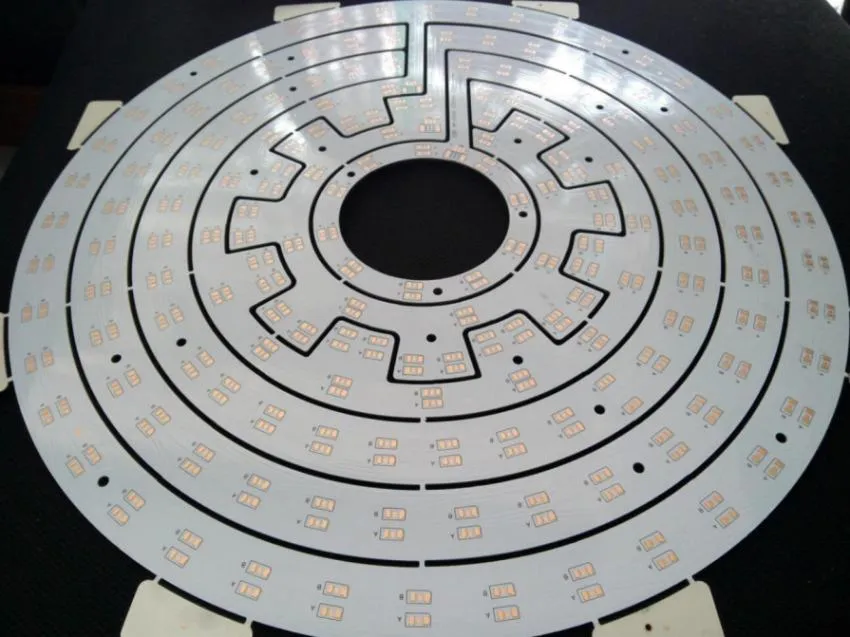
An Aluminum PCB Prototype is a small batch or sample of printed circuit boards (PCBs) built specifically for testing and validation, where the base material (substrate) is primarily aluminum instead of the standard fiberglass (FR4). These are also commonly known as Metal Core PCB (MCPCB) prototypes, with aluminum being the most popular metal core.
Here’s a breakdown of what it means and why it’s important:
Aluminum PCB (MCPCB) Structure:
Base Layer (Core): A thick layer of aluminum (typically 0.8mm to 3.0mm or more). This provides mechanical rigidity and is the key component for heat dissipation.
Thermal Insulation/Conduction Layer: A thin dielectric layer bonded to the aluminum core. This layer is electrically insulating but thermally conductive. Its quality directly impacts how efficiently heat transfers from the components to the aluminum base.
Copper Circuit Layer: A layer of copper foil (typically 1oz to 4oz) bonded to the dielectric layer. This is etched to form the circuit traces, just like a standard PCB.
Solder Mask: Applied over the copper layer, leaving exposed pads for component soldering.
Silkscreen: (Optional) For component designators and logos.
Key Feature & Benefit:
Superior Thermal Management: This is the primary reason for choosing an aluminum PCB. The aluminum core acts as a giant heatsink, efficiently drawing heat away from power-hungry components (LEDs, power transistors, motor drivers, processors) and dissipating it into the surrounding environment or an attached heatsink. This prevents overheating, improves performance/reliability, and allows for higher power densities or smaller designs.
Purpose of the Aluminum pcb Prototype:
Design Validation: Testing the electrical functionality of the circuit.
Thermal Performance Testing: Crucially, verifying that the design effectively dissipates heat under expected operating loads. Measuring temperatures at critical points.
Mechanical Fit & Integration: Ensuring the board physically fits into its intended enclosure and interfaces correctly with connectors, heatsinks, and other components.
Aluminium PCB Manufacturing Process Check: Verifying that the chosen fabrication process (especially bonding the dielectric layer and etching) works correctly for the specific design before committing to volume production.
Component Compatibility: Testing how real-world components perform and solder onto the aluminum base material.
Reliability Testing: Assessing performance under stress conditions (thermal cycling, vibration, power cycling).
Typical Applications for Aluminum PCB Prototypes:
High-Power LED Lighting: (Most common use) Street lights, automotive lighting, stage lighting, industrial lighting.
Power Supplies & Converters: Motor drives, inverters, DC-DC converters, power amplifiers.
Automotive Electronics: Engine control units, power regulators, LED lighting systems.
RF/Microwave Applications: Where thermal stability is critical for performance.
Industrial Controls: Power modules, motor controllers.
Consumer Appliances: Power sections of high-end audio, appliances with high-power components.
The Aluminium PCB Prototyping Process:
Design: Using CAD software (like KiCad, Altium, Eagle) with specific rules for MCPCBs (e.g., thermal vias might be less critical or handled differently).
Fabrication: Specialized PCB manufacturers use processes involving:
Bonding the dielectric layer to the aluminum core.
Bonding the copper foil to the dielectric.
Standard imaging, etching, drilling (if needed), solder mask, and silkscreen application.
Routing/V-scoring the aluminum base (more challenging than FR4).
Assembly (PCBA Prototype): Components are soldered onto the bare aluminum PCB prototype.
Testing & Validation: Thorough electrical, thermal, and functional testing.
Why Aluminium PCB Prototype First?
Cost: Aluminum PCBs are generally more expensive than FR4. Finding design flaws in a small prototype batch is far cheaper than discovering them after mass production.
Risk Mitigation: Validates the critical thermal management performance before committing to volume.
Design Refinement: Allows for tweaks to the layout, component placement, or thermal design based on real-world prototype testing.
Lead Time: Prototypes are faster to produce than full production runs, speeding up the development cycle.
In essence, an Aluminum PCB Prototype is a vital step in developing products that generate significant heat. It allows engineers to test and prove that their circuit design not only works electrically but also effectively manages thermal energy using the aluminum core structure before investing in large-scale manufacturing.
In China, PCBA123 can provide quick turn delivery time for Aluminum PCB prototype with 24 hours, if you need Aluminium pcb prototype, please contact us freely, thank you.