What is wire Harness Assembly and cable assembly?
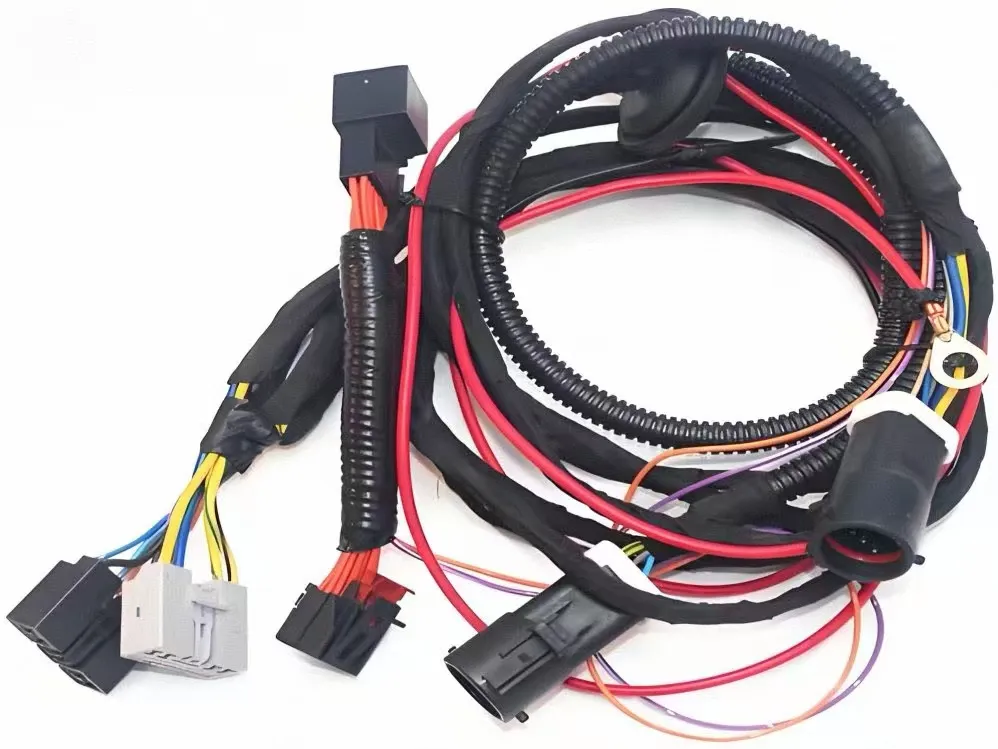
Cable & Harness Assembly (often called Wire Harness Assembly or Cable Assembly) is a crucial manufacturing process that involves bundling individual wires and cables together with various components to create an integrated, organized system for transmitting electrical power, signals, or data within a larger piece of equipment.
Here’s a breakdown of what it entails:
Core Components:
Wires/Cables: Individual conductors (single-core wires) or pre-bundled groups (multi-core cables).
Connectors: Plugs, sockets, or terminals attached to the ends of wires/cables to plug into devices, circuit boards, or other harnesses (e.g., USB, D-sub, circular connectors, terminal blocks).
Terminals: Metal components crimped or soldered onto the ends of individual wires to connect securely within a connector housing.
Protective Sleeving/Tubing: Braided loom, split conduit, heat-shrink tubing, or spiral wrap used to bundle wires, protect them from abrasion, heat, chemicals, moisture, and electromagnetic interference (EMI).
Strain Relief: Components (often part of the connector or added separately) that anchor the cable/harness and prevent tension from damaging the electrical connections.
Ties & Clamps: Cable ties (zip ties), clamps, or adhesive mounts to secure the harness along its routing path within the equipment.
Labels & Markers: Identifiers printed on sleeves, attached tags, or printed directly on wires for tracing circuits, aiding installation, and servicing.
The Assembly Process:
Design & Documentation: Creating detailed schematics, assembly drawings, and bills of materials (BOM) specifying wire types, lengths, colors, connector types, routing paths, and component locations.
Cutting: Wires and cables are cut to precise lengths specified in the design.
Stripping: Insulation is precisely removed from the ends of wires to expose the conductor for termination.
Termination: Bare wire ends are fitted with terminals (crimped or soldered) or soldered directly into connectors.
Insertion: Terminated wires are inserted into their designated cavities within connector housings.
Bundling & Routing: Wires/cables are grouped together according to the design, often using a physical board (harness board or formboard) that acts as a template for the harness shape. Sleeving, conduit, or tape is applied.
Securing: Ties, clamps, and strain reliefs are installed.
Labeling: Wires and bundles are labeled as per the design.
Testing & Inspection: Critical Step! Assemblies undergo rigorous electrical testing (continuity, hi-pot/hipot – high potential for insulation breakdown, resistance) and visual inspection to ensure correctness, safety, and reliability. This often involves specialized automated test equipment (ATE).
Packaging: Finished assemblies are packaged to prevent damage during shipping and installation.
Cable Assembly vs. Wire Harness:
Cable Assembly: Typically refers to a simpler bundle, often just a single multi-conductor cable (like an HDMI cable) with connectors molded or attached on each end. Focus is on the ends.
Wire Harness: Usually a more complex bundle of multiple individual wires and/or cables branching out to connect to multiple points within a system (like the entire wiring system inside a car engine compartment). Focus is on the internal routing and multiple termination points.
Key Benefits:
Organization: Replaces a chaotic mess of loose wires with a single, manageable unit.
Reliability & Safety: Protects wires from damage, prevents shorts, ensures correct connections, simplifies testing.
Simplified Installation: Pre-assembled harnesses drastically reduce installation time and errors on the factory floor or in the field.
Serviceability: Clearly labeled and organized wires make troubleshooting and repairs easier.
Optimized Space: Efficient routing and bundling save space within equipment enclosures.
Enhanced Performance: Proper shielding within the assembly minimizes EMI/RFI interference.
Where They Are Used (Ubiquitous!):
Automotive (cars, trucks, motorcycles)
Aerospace & Aviation (aircraft, spacecraft)
Industrial Machinery & Automation
Medical Equipment
Consumer Electronics (appliances, computers, TVs)
Telecommunications Equipment
Military & Defense Systems
Robotics
Energy (solar, wind turbines)
In essence, a cable and Wire harness assembly is the organized, protected, and pre-tested “nervous system” or “circulatory system” that efficiently and reliably distributes power and signals throughout complex electrical and electronic equipment.